Understanding Your Credit Score: The Key to Better Auto Loan Rates
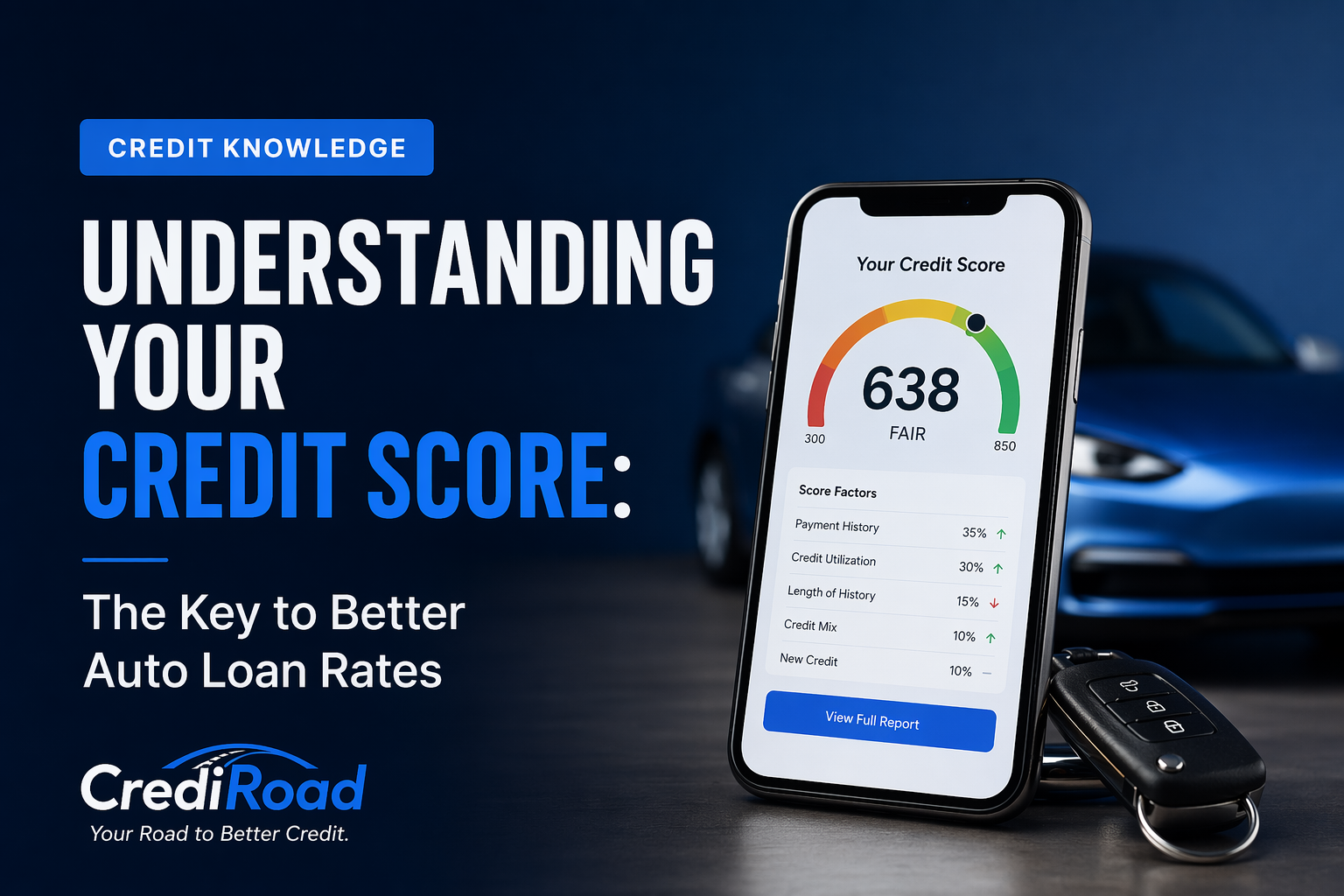
Are you dreaming of a new (or new-to-you) car but worried about getting approved for a loan or facing sky-high interest rates? The secret to unlocking affordable car financing often lies in one crucial number: your credit score. For many individuals, especially those with bad credit, no credit, or those actively rebuilding their financial health, the concept of a "credit score for a car loan" can feel like a mysterious barrier.
But it doesn't have to be. Understanding your credit score is the first, most powerful step you can take on your journey to car ownership. It empowers you to approach lenders with confidence, negotiate better terms, and ultimately save thousands of dollars over the life of your auto loan. This comprehensive guide will demystify credit scores, explain how they impact your auto loan rates, and show you how CrediRoad.com can be your trusted partner in improving your score and securing the vehicle you need.
By the end of this article, you'll have a clear roadmap to not only understanding your current credit standing but also to proactively improving it, paving the way for a smoother, more affordable car buying experience. Let CrediRoad be your guide on your "Road to Better Credit."
Your Credit Score: The Foundation of Your Auto Loan Journey
Your credit score is a three-digit number that acts as a summary of your creditworthiness. Lenders use this score to quickly assess the risk of lending you money. When it comes to securing an auto loan, this number is paramount, influencing everything from whether your application is approved to the interest rate you'll pay.
What is a Credit Score?
While there are various scoring models, the most commonly used in the United States are FICO Scores and VantageScores. Both models analyze your credit report data to generate a score, typically ranging from 300 to 850. A higher score indicates lower risk to lenders, while a lower score suggests a higher risk of default. Understanding which score a particular auto lender uses can be helpful, though generally, improving one will improve the other.
A strong credit score signals to lenders that you are a responsible borrower who pays debts on time. This translates directly into better loan terms for you. Conversely, a low score may lead to higher interest rates, stricter loan conditions, or even outright denial.
Why Your Score is Crucial for Auto Loans
For an auto loan, your credit score isn't just a formality; it's a direct determinant of your financial future. Lenders use your score to:
- Determine Eligibility: Many lenders have minimum credit score requirements, especially for their most competitive rates.
- Set Interest Rates: This is arguably the most significant impact. Borrowers with excellent credit (e.g., 780+) can secure the lowest interest rates, sometimes even 0% APR during promotional periods. Those with fair (620-679), poor (580-619), or very poor (under 580) credit will typically face significantly higher rates, leading to much larger total payments over the life of the loan.
- Influence Loan Terms: Your score can affect the loan amount you're approved for, the length of your repayment period, and even the down payment required. A lower score might mean you need a larger down payment to offset the lender's perceived risk.
The difference a few percentage points in interest can make over a five or six-year car loan is substantial. Investing time in understanding and improving your credit score is an investment in your future car ownership affordability.
Decoding the Factors: What Shapes Your FICO Score for a Car Loan
Your FICO Score, and by extension, your auto loan interest rates, are influenced by several key categories of information on your credit report. Understanding these categories is essential for anyone looking to improve their standing and secure a better deal.
Payment History (35%)
This is the most critical factor. Making payments on time, every time, across all your credit accounts (credit cards, previous loans, mortgages, etc.) is paramount. Late payments, collections, bankruptcies, or foreclosures can severely damage your score and make lenders wary. A single late payment can ding your score, and multiple can be devastating for your chances of getting a favorable auto loan.
Amounts Owed (30%)
This category looks at how much debt you currently have. A key metric here is your credit utilization ratio – the amount of credit you're using compared to your total available credit. Keeping this ratio low (ideally under 30%) shows you're not over-reliant on credit. High balances on credit cards or other revolving credit can negatively impact your score, signaling potential financial strain to auto lenders.
Length of Credit History (15%)
Lenders like to see a long history of responsible credit use. The older your accounts, the better, as it provides more data points for lenders to assess your reliability. If you're a first-time car buyer with no credit history, this category can be challenging, but it's not insurmountable. CrediRoad offers resources specifically for First-Time Car Buyer with No Credit? Your CrediRoad Guide, providing tailored advice to help you build your credit profile.
New Credit (10%)
Opening multiple new credit accounts in a short period can be seen as risky behavior. Each time you apply for credit, a "hard inquiry" is typically placed on your credit report, which can temporarily lower your score. While shopping for an auto loan, these inquiries are often grouped together and count as one within a certain timeframe (usually 14-45 days), minimizing the impact. This is why Get Prequalified for a Car Loan: No Impact on Your Credit Score is such a valuable tool – it uses a soft inquiry, which doesn't affect your score.
Credit Mix (10%)
Lenders like to see that you can responsibly manage different types of credit, such as revolving credit (credit cards) and installment loans (mortgages, student loans, auto loans). A diverse credit portfolio demonstrates a broader financial management capability. However, this is the least impactful factor, and you shouldn't open accounts you don't need just to improve your mix.
How to Improve Your Credit Score for a Car Loan
Even if your credit score isn't where you want it to be, you have the power to improve it. Taking proactive steps can significantly enhance your chances of getting approved for an auto loan with better terms. Remember, building credit is a marathon, not a sprint, but every positive action counts.
Strategies for Boosting Your Score
- Pay Your Bills on Time, Every Time: This cannot be stressed enough. Set up automatic payments or reminders to ensure you never miss a due date. Late payments are a major red flag for lenders.
- Reduce Your Credit Card Balances: Focus on paying down high-interest credit card debt. Lowering your credit utilization ratio (debt-to-limit) will have a noticeable positive impact on your score.
- Avoid Opening Too Many New Accounts: While some new credit is fine, avoid applying for multiple new credit cards or loans in a short period, as this can trigger several hard inquiries.
- Check Your Credit Report Regularly: Errors on your credit report can unfairly drag down your score. You're entitled to a free copy of your credit report from each of the three major bureaus (Experian, Equifax, TransUnion) once every 12 months at AnnualCreditReport.com. Review them carefully and dispute any inaccuracies.
- Consider a Secured Credit Card or Credit Builder Loan: If you have limited or no credit history, these can be excellent tools to establish positive payment history.
- Become an Authorized User: If a trusted family member with excellent credit has a credit card and is willing to add you as an authorized user, their positive payment history could reflect on your report.
The Impact of Prequalification
When you're ready to explore auto loan options, understanding the difference between prequalification and pre-approval is vital. Prequalification uses a "soft pull" of your credit, which doesn't affect your score. It gives you an estimate of what you might qualify for, helping you set realistic expectations.
CrediRoad specializes in offering easy prequalification processes that empower you to understand your options without impacting your credit score. This approach allows you to explore multiple offers from our network of lenders, giving you a clear picture of what's available before committing to a formal application.
CrediRoad's Toolkit: Monitor, Simulate, and Secure Your Loan
At CrediRoad, we believe that everyone deserves a fair shot at car ownership, regardless of their credit history. That's why we've developed a suite of user-friendly tools designed to empower you on your journey to better credit and a better auto loan experience. We aim to provide transparency and personalized guidance every step of the way.
Credit Score Simulator
Imagine being able to see how different financial decisions might impact your credit score before you make them. Our Credit Score Simulator does just that. This interactive tool allows you to input potential actions – like paying off a credit card, taking out a new loan, or even missing a payment – and instantly see the potential effect on your score. This foresight is invaluable for strategic planning, especially when you're working towards a specific credit goal for a car loan. It helps you understand the "what ifs" and make informed choices to boost your credit.
Loan Calculator
Budgeting for a car loan can be complex, but our intuitive Loan Calculator simplifies the process. Input your desired loan amount, interest rate (which you can estimate using your current credit score), and repayment term, and the calculator will provide an estimate of your monthly payments. This tool is crucial for helping you understand how interest rates directly translate into your monthly budget, enabling you to find a payment plan that truly fits your financial situation.
Guided Matching Process
Beyond individual tools, CrediRoad's signature "Find What Fits Me" questionnaire takes the guesswork out of finding the right auto loan. By answering a few simple questions, you're not just applying for a loan; you're initiating a personalized matchmaking process. Our system analyzes your unique financial profile and connects you with a curated selection of lenders from our extensive network – including those specializing in challenged credit. This guided approach helps you bypass rejection and quickly find lenders who are most likely to approve your application with the best possible terms. To learn more about how this works, explore Unlock Your Car Dreams: How CrediRoad's "Find What Fits Me" Works.
Through these tools and our collaborative platform, CrediRoad helps you not only monitor and improve your credit score but also navigate the complex world of auto financing with confidence and clarity.
Securing an Auto Loan with Less-Than-Perfect Credit
Even if your credit score isn't excellent, car ownership is still within reach. Many lenders specialize in working with credit-challenged individuals, understanding that everyone's financial journey is unique. The key is to approach the process strategically and with realistic expectations.
Realistic Expectations
With a lower credit score, you might not qualify for the lowest advertised interest rates. Lenders perceive a higher risk, so they compensate by charging a higher APR. However, this doesn't mean you'll be stuck with an unmanageable loan. The goal is to find the most favorable terms available to you right now, and then use that auto loan as a stepping stone to rebuild your credit. Don't be afraid to ask questions and fully understand all loan terms before signing.
Second-Chance Financing
This is where CrediRoad truly shines. We partner with a broad network of lenders, many of whom specialize in "second-chance" financing, including subprime auto loans. These lenders are often more flexible and willing to look beyond just your credit score, considering your overall financial stability, income, and ability to repay. They provide options for those who might typically be turned away by traditional banks. For a deeper dive into these opportunities, read Bad Credit Auto Loans in 2026: Your Path to Car Ownership.
The Role of Refinancing
Getting an initial auto loan with a higher interest rate isn't necessarily a permanent situation. Once you've made consistent, on-time payments for 6-12 months, your credit score will likely improve. At that point, you may become eligible to refinance your existing auto loan at a lower interest rate, significantly reducing your monthly payments and total interest paid. Refinancing can be a powerful tool for credit building and long-term savings. Explore The Ultimate Guide to Rebuilding Credit with an Auto Loan for more insights on leveraging your car loan to improve your financial standing.
CrediRoad is committed to helping you find these opportunities, making car ownership accessible and manageable, even when facing credit challenges.
Frequently Asked Questions About Credit Scores and Auto Loans
What is considered a "good" credit score for a car loan?
Generally, a FICO score of 660-699 is considered "Good," 700-749 "Very Good," and 750+ "Exceptional." Borrowers in these ranges typically qualify for the most competitive auto loan rates. However, many lenders offer loans to individuals with scores below 660, sometimes referred to as "subprime" or "non-prime" loans.
Will applying for an auto loan hurt my credit score?
A formal auto loan application typically results in a "hard inquiry" on your credit report, which can cause a small, temporary dip in your score (usually 5-10 points). However, FICO and VantageScore models often treat multiple auto loan inquiries within a short period (typically 14-45 days) as a single inquiry, minimizing the impact. Using prequalification tools, like CrediRoad's, involves a "soft inquiry" and does not affect your credit score.
How long does it take to improve my credit score for an auto loan?
The timeframe varies greatly depending on your starting point and the actions you take. Minor improvements can be seen within a few months by consistently paying bills on time and reducing credit card balances. Significant improvement, especially if you're rebuilding from a very low score, can take 6-12 months or even longer. Consistency is key.
Can I get an auto loan with no credit history?
Yes, it's possible. Lenders may consider factors like steady income, employment history, and a down payment. CrediRoad connects with lenders who specialize in first-time buyers and those with limited credit history. You might also consider applying with a co-signer who has good credit.
How often should I check my credit score?
It's a good practice to check your credit score and report at least once a year to monitor for errors and track your progress. If you're actively working to improve your score for a specific goal like an auto loan, checking more frequently (e.g., monthly) can be beneficial. Many credit card companies and financial services (like CrediRoad's simulator) offer free credit score access.
Your Road to Better Credit Starts Here
Understanding your credit score is more than just knowing a number; it's about gaining control over your financial future, especially when it comes to significant purchases like a vehicle. Your credit score directly dictates the interest rates and terms of your auto loan, profoundly impacting your budget and overall car ownership experience. By focusing on responsible credit habits, monitoring your financial health, and leveraging the right tools, you can significantly improve your standing.
CrediRoad.com is designed to be your trusted companion on this journey. Whether you're looking to understand your current score, simulate how financial decisions might affect it, or find tailored auto loan options despite credit challenges, our platform offers the resources and connections you need. Don't let past credit issues or a lack of understanding stand between you and the car you need.
Take the first step towards a more empowered car buying experience. Explore our Credit Score Simulator and embark on your personalized journey with CrediRoad's "Find What Fits Me" questionnaire today. We're here to help you navigate your unique road to better credit and secure the vehicle that fits your life.