Understanding Your Credit Score: Impact on Auto Loan Rates in 2026
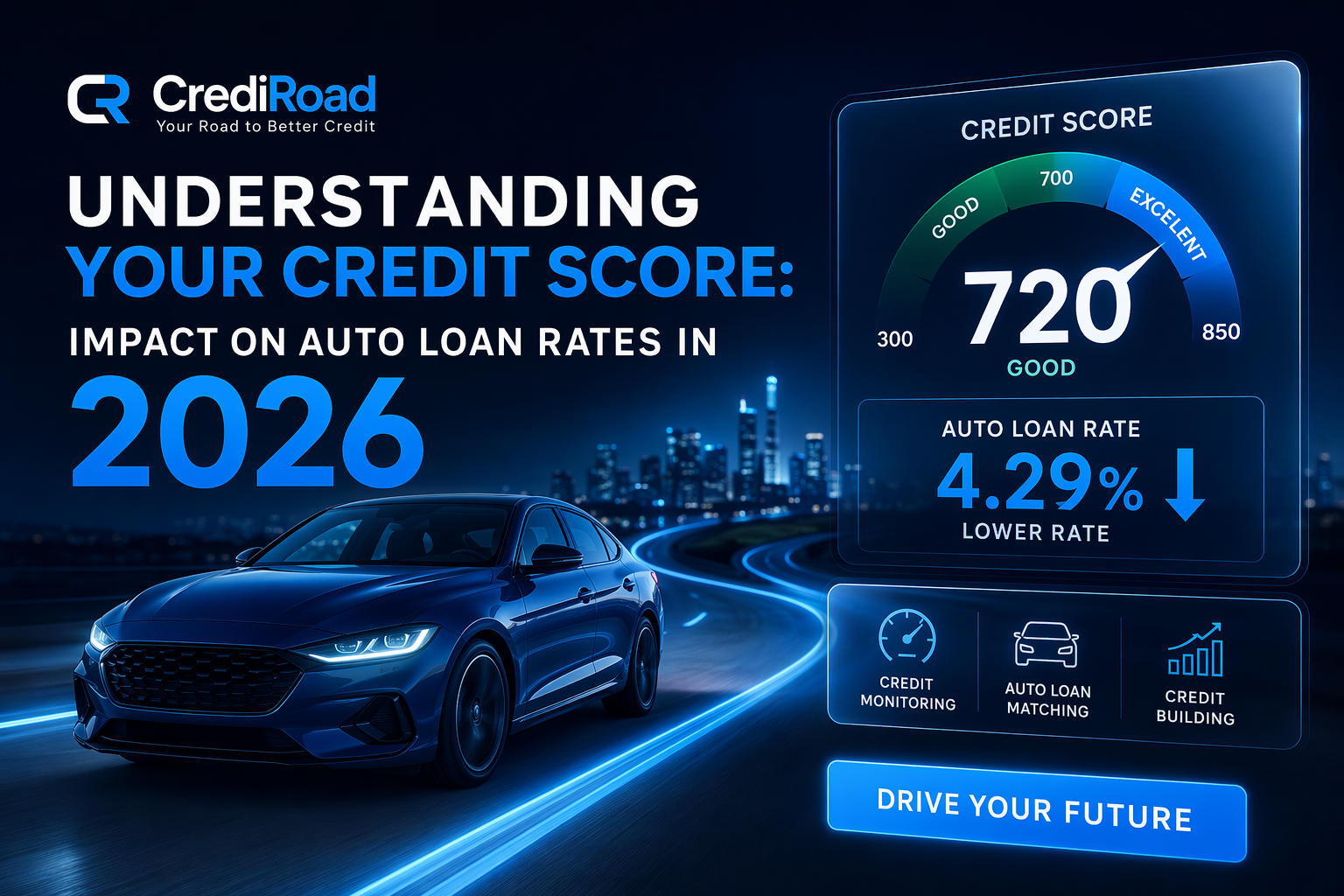
For most people, a car is an indispensable part of daily life, providing the freedom to commute, run errands, and connect with loved ones. However, securing an affordable auto loan often hinges on one critical factor: your credit score. In 2026, understanding how your credit score influences auto loan rates is more important than ever, as economic factors and lending practices continue to evolve. Whether you're dreaming of a brand-new vehicle or a reliable used car, your credit score will largely determine the terms and interest rate of your financing.
A strong credit score can unlock significantly lower interest rates, translating into thousands of dollars saved over the life of your loan. Conversely, a less-than-perfect score doesn't necessarily mean you're out of luck, but it does require a more strategic approach to car financing. This comprehensive guide will demystify the relationship between your credit score and auto loan rates, offering practical advice on how to improve your score and navigate the lending landscape, even if your credit has seen better days. CrediRoad is here to illuminate your path to car ownership, regardless of your credit history.
What Your Credit Score Means for Your Car Loan
Your credit score is a three-digit number that summarizes your financial reliability to lenders. For auto loans, this number is a primary indicator of your likelihood to repay debt. Lenders use it to assess risk: a higher score suggests lower risk and typically qualifies you for better terms, while a lower score indicates higher risk, leading to higher interest rates or stricter loan conditions. Understanding the nuances of credit scoring can empower you in your car-buying journey.
FICO vs. VantageScore for Auto Lenders
While both FICO and VantageScore are widely used, FICO scores remain the most prevalent in auto lending decisions. FICO Auto Scores, specifically tailored for the auto industry, place a greater emphasis on past auto loan payment history. These scores typically range from 250-900, differing slightly from the standard 300-850 FICO range. VantageScore, though growing in popularity, might be used by some lenders, but it's wise to assume FICO is the primary metric for car loans. Knowing which score lenders prioritize allows you to focus your efforts on improving the most relevant metrics.
Good, Fair, and Poor Credit Tiers for Auto Loans
Auto lenders categorize credit scores into tiers, which directly correspond to the interest rates offered. While exact ranges can vary by lender and current market conditions, here's a general breakdown for auto loans:
- Excellent (781-850): Borrowers in this tier typically receive the lowest interest rates and most favorable terms. You're considered a prime borrower.
- Good (661-780): These scores still qualify for competitive rates, though slightly higher than excellent. Many lenders consider this a strong credit profile.
- Fair (601-660): Borrowers here will likely see moderately higher rates. This is often where subprime lending begins, and lenders may require a larger down payment or shorter loan term.
- Poor (501-600): Securing a loan can be challenging in this range, often resulting in high interest rates and fees. Lenders may require a co-signer or substantial down payment. This is where Bad Credit Auto Loans in 2026: Your Path to Car Ownership resources become crucial.
- Very Poor (300-500): Financing options are very limited and come with the highest possible rates. This tier often points to a need for significant credit repair before attempting a major loan.
Your credit tier profoundly impacts your monthly payment and the total cost of your vehicle. A difference of even a few percentage points in interest can mean thousands of dollars over a 5-year loan, underscoring the value of a higher credit score.
Factors That Influence Your Auto Loan Rates
Beyond the credit score itself, several other elements play a crucial role in determining the interest rate you'll be offered for an auto loan. Lenders consider a holistic view of your financial situation, aiming to mitigate their risk. Understanding these factors can help you position yourself for the best possible financing outcome in 2026.
Payment History and Credit Utilization
These two components are arguably the most influential on your credit score and, by extension, your auto loan rates. Your payment history accounts for approximately 35% of your FICO score. Late payments, collections, and bankruptcies significantly lower your score and signal high risk to auto lenders, leading to higher rates. A consistent history of on-time payments, especially on other installment loans or credit cards, demonstrates reliability.
Credit utilization refers to the amount of credit you're using compared to your total available credit. Keeping this ratio low (ideally below 30%) positively impacts your score. High utilization suggests you might be over-reliant on credit, which lenders view as a potential risk, pushing up your auto loan interest rates.
Loan Term, Down Payment, and Vehicle Type
The specifics of the loan itself and the vehicle you choose also heavily influence your interest rate.
- Loan Term: Shorter loan terms typically come with lower interest rates because the lender's risk exposure is reduced. However, this means higher monthly payments. Longer terms might offer lower monthly payments but accumulate more interest over time and often carry a slightly higher rate due to increased risk.
- Down Payment: A substantial down payment reduces the amount you need to borrow, thus lowering the lender's risk. This can often translate into a lower interest rate.
- Vehicle Type: New cars generally command lower interest rates than used cars. Lenders perceive new cars as less risky because they are less likely to break down and depreciate less rapidly in the short term. However, the initial cost is higher. Used cars, while more affordable upfront, often carry higher rates due to their age, mileage, and potential for unforeseen issues.
Debt-to-Income Ratio
Your Debt-to-Income (DTI) ratio is another critical factor. This ratio compares your total monthly debt payments to your gross monthly income. Lenders use DTI to assess your ability to comfortably take on additional debt, like a car loan. A lower DTI (generally below 40%) indicates you have more disposable income to cover your loan payments, making you a less risky borrower. Conversely, a high DTI might lead to higher interest rates or even loan denial, as it suggests your finances are already stretched thin. CrediRoad helps you explore personalized options that fit your financial situation.
Strategies for Improving Your Credit Score for a Car Loan
Improving your credit score is a strategic move that can save you thousands on an auto loan. While it takes time and discipline, the effort is well worth it. By focusing on key areas, you can significantly boost your creditworthiness and secure more favorable terms for your next vehicle purchase in 2026.
The Power of Payment History
As mentioned, payment history is the most significant component of your credit score. The most impactful strategy for improvement is consistently making all your payments on time, every time. This includes credit cards, student loans, mortgages, and any other lines of credit. Even one late payment can have a disproportionately negative effect, so setting up automatic payments or payment reminders can be incredibly beneficial. A long history of punctual payments demonstrates reliability, which is exactly what auto lenders are looking for.
Managing Credit Utilization
Your credit utilization ratio—how much credit you're using versus how much is available to you—is the second most important factor. Aim to keep your total credit utilization below 30%, but ideally even lower, like 10%. For example, if you have a credit card with a $10,000 limit, try to keep your balance below $3,000. You can improve this by:
- Paying down existing balances.
- Not closing old credit card accounts, as this reduces your total available credit and can negatively impact your ratio.
- Requesting credit limit increases (but only if you can resist the temptation to spend more), which also increases your available credit.
Tools to Simulate and Plan
CrediRoad offers innovative tools designed to help you understand and improve your credit for a car loan. Our Boost Your Credit & Drive Away: CrediRoad's Simulator & Loan Calculator allows you to simulate the impact of different financial actions on your credit score. Want to see how paying off a credit card or opening a new line of credit might affect your score before applying for an auto loan? Our simulator provides insights, helping you plan your credit journey strategically. This foresight can be invaluable, especially when aiming for a better rate in 2026.
Accessing Auto Loans Even with a Lower Score
Having a lower credit score doesn't automatically close the door on car ownership. While it may require a more tailored approach, options are available. CrediRoad specializes in connecting individuals with challenging credit to financing solutions that work for them, helping you navigate the complexities of subprime lending with transparency and support.
Exploring Subprime Options
For those with credit scores in the "Fair" or "Poor" range, subprime auto loans become a vital pathway. These loans are designed for borrowers who may not qualify for traditional prime loans due to a lower credit score, limited credit history, or past financial difficulties. While subprime loans typically come with higher interest rates to offset the increased risk for lenders, they provide an opportunity to finance a vehicle and, importantly, begin rebuilding credit. It's crucial to understand the terms and conditions thoroughly. CrediRoad can help you find reputable subprime lenders within our network. You can also learn more about specific solutions for challenged credit in our article, The Ultimate Guide to Rebuilding Credit with an Auto Loan.
The Benefit of Prequalification
Before you even step foot in a dealership, getting Get Prequalified for a Car Loan: No Impact on Your Credit Score is a smart move, especially with a lower score. Prequalification involves a soft credit inquiry, which doesn't affect your credit score, but gives you a realistic estimate of the loan amount and interest rate you might qualify for. This empowers you by:
- Setting realistic expectations for your car budget.
- Allowing you to compare offers from multiple lenders without multiple hard inquiries.
- Giving you leverage at the dealership, as you already have a financing offer in hand.
Prequalification is a low-risk way to understand your financing options and strengthen your negotiating position.
CrediRoad's Advantage for Challenged Credit
CrediRoad is built specifically to assist individuals, including those with challenged credit, in securing affordable vehicle financing. Our platform, including the "Find My Perfect Ride" tool, leverages a vast network of over 26 lenders, many of whom specialize in working with bad credit. We understand that life happens, and a past financial misstep shouldn't permanently sideline your transportation needs.
We offer:
- Credit-Friendly Vehicle Financing: We connect you with lenders actively seeking to approve loans for a wide range of credit profiles.
- Personalized Matching: Our system matches you with financing options that align with your unique financial situation and needs.
- Credit Building Tools: Beyond just loans, we offer tools like our credit simulator to help you plan and improve your financial standing over time.
Don't let your credit history define your future transportation. CrediRoad provides a clear path forward, making the car-buying process transparent and accessible. CrediRoad.com: Your Smart Path to Auto Loans & Refinancing explains how we can help.
Frequently Asked Questions About Credit Scores and Auto Loans
Q: How quickly can I improve my credit score for an auto loan? A: Significant credit score improvements typically take several months to a year, depending on your starting point and the actions you take. Consistent on-time payments and reducing credit card balances are the fastest ways to see positive changes.
Q: Will checking my own credit score hurt it? A: No, checking your own credit score (a "soft inquiry") does not negatively impact your credit score. Lenders' prequalification checks are also soft inquiries. Only "hard inquiries" by lenders when you apply for credit can temporarily lower your score.
Q: Is it better to get a car loan from a bank, credit union, or dealership? A: It's always best to shop around. Banks and credit unions often offer competitive rates if you have good credit. Dealerships can sometimes offer promotions or work with various lenders (including subprime ones), but their rates might be higher. Prequalifying with CrediRoad allows you to compare offers without obligation before visiting a dealership.
Q: Can I get an auto loan with no credit history? A: Yes, it's possible, especially for first-time buyers. Lenders may look for other factors like steady income, a large down payment, or require a co-signer. CrediRoad can help First-Time Car Buyer with No Credit? Your CrediRoad Guide.
Q: What is a good interest rate for an auto loan in 2026? A: "Good" is subjective and depends on your credit score and current market conditions. As of 2026, borrowers with excellent credit might see rates below 5-7% for new cars, while those with fair or poor credit could face rates upwards of 10-20% or even higher. Comparing personalized offers is key to finding your best rate.
Conclusion
Your credit score is an undeniable force in the world of auto financing, directly influencing the interest rates you'll pay and the overall cost of your vehicle. In 2026, a strong credit score remains your best asset for securing favorable terms on an auto loan, saving you potentially thousands of dollars over time. Understanding the components of your score, managing your payment history and credit utilization, and utilizing tools like CrediRoad's credit simulator are crucial steps toward achieving your car ownership goals.
Even with challenged credit, the path to a reliable vehicle is not closed. Options like subprime lending and strategic prequalification can open doors that might otherwise seem shut. CrediRoad is committed to providing a transparent, credit-friendly platform that empowers every individual to find their perfect ride and the financing to match, regardless of their credit background. Take control of your auto loan journey.